EN

Smart Space Capsule Features: What Operators Should Evaluate
For a capsule hotel, glamping resort, or compact tourism accommodation project, smart space capsule features should be assessed as an operating system rather than a list of novelty add-ons. A room panel may look impressive during a site visit, but operators need to know who can manage it, what happens during a network interruption, how it supports guest turnover, and whether it can be maintained after handover.
From a resort-development perspective, the useful question is not “How many smart functions can the capsule include?” It is “Which functions make a small accommodation unit easier to sell, run, and service?” That distinction helps teams balance guest comfort with staffing, safety, energy management, and future expansion.
Start with the operating model, not the control panel
Before comparing smart space capsule features, define the site model. A scenic overnight project with self-check-in has different needs from a staffed resort or a construction-camp accommodation cluster. Map the guest journey from booking to entry, sleep, checkout, cleaning, and maintenance. Then identify where a feature removes a real operating task or creates another one.
For example, a centralized system may help a manager check room status across multiple units. Yet it should not leave housekeeping unable to operate lighting or climate settings locally. Ask the supplier to demonstrate ordinary tasks in person: resetting a room, responding to a lost access credential, reporting a fault, and switching a unit into maintenance mode.
Evaluate guest controls for clarity and recovery
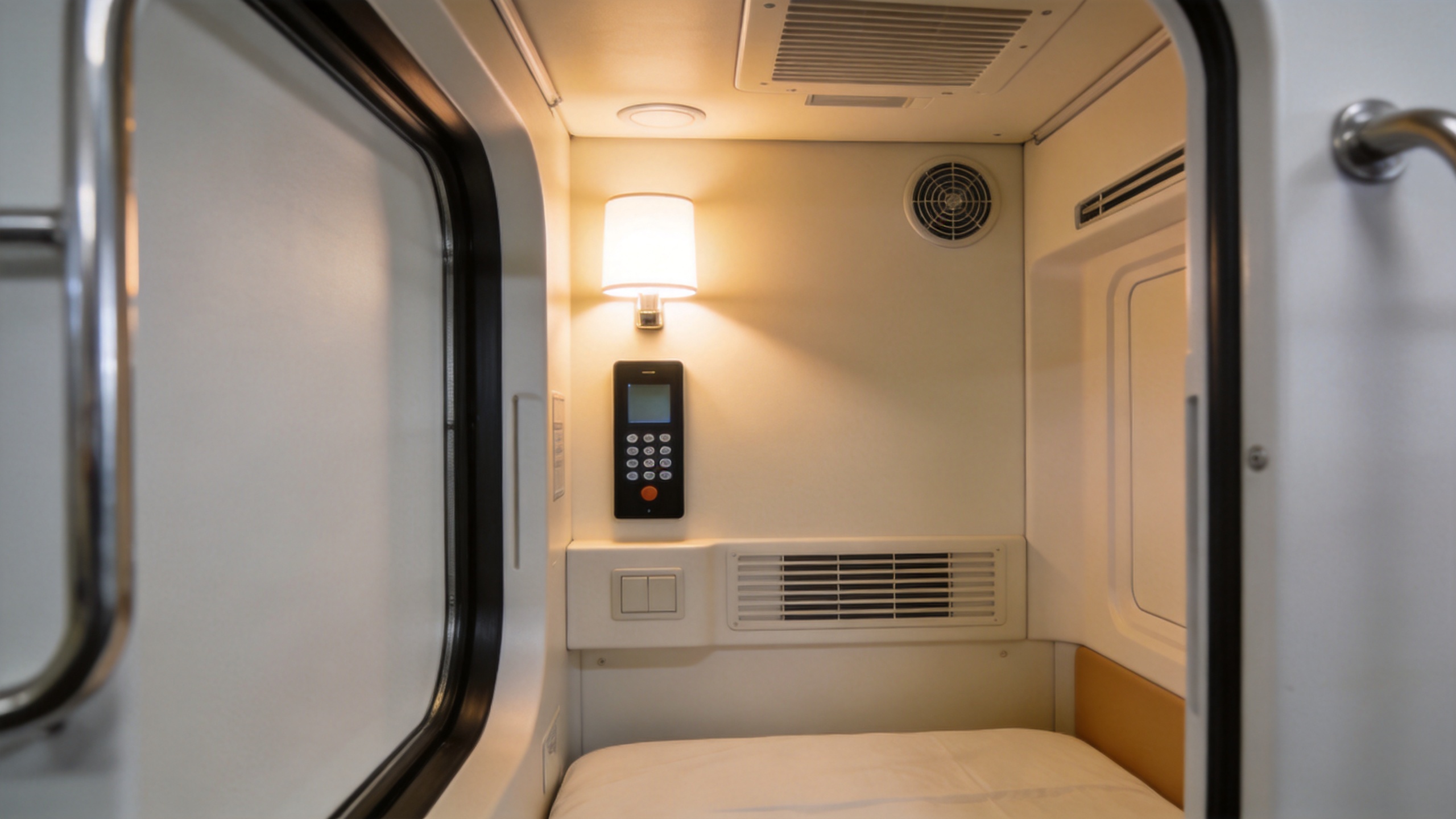
Guest-facing controls are often the most visible smart space capsule features. Common categories include lighting scenes, temperature settings, curtain or privacy controls, ventilation controls, media controls and service-request functions. Hospitality technology research commonly describes room systems that group lighting, climate, blinds, and media controls through a panel or mobile control channel. For a compact cabin, grouping controls can reduce friction, but only when the control layout remains simple in low light and does not require a lengthy onboarding explanation.
- Keep essential actions local: guests should be able to control light, airflow, and privacy from inside the unit.
- Check manual fallback: verify how key functions work if the app, gateway, or Wi-Fi is unavailable.
- Test language and accessibility: icons, instructions, and emergency information should fit the target guest mix.
- Separate guest and staff permissions: a cleaning or maintenance workflow should not expose guest data or disrupt occupied units.
The right smart space capsule features make routine actions intuitive; they should not turn a guest room into a troubleshooting exercise.
Connect access control to the real arrival workflow
Access control can support self-service arrivals, timed stays, and audit trails. It also needs an operational plan. Compare credentials such as codes, cards, mobile keys, or front-desk-issued access against your property’s connectivity, staffing pattern, and local privacy requirements. Ask how credentials are issued, revoked, and recovered when a guest changes phones or arrives after support hours.
For clustered capsule accommodation, door-status visibility can help staff prioritize inspections between stays. Still, do not assume remote access is a substitute for on-site procedures. Establish who may unlock a unit, what evidence is recorded, and how emergency access is controlled. These are procurement questions as much as software questions.
Put safety, ventilation, and emergency operation ahead of automation
Smart space capsule features do not replace the project’s safety design. Local authorities and project professionals should review fire detection, emergency lighting, egress, electrical protection, ventilation, and any required suppression systems for the site and its occupancy. Hotel safety guidance commonly lists alarms, extinguishers, emergency lighting, and locally applicable fire requirements as core controls; the exact specification varies by jurisdiction.
During supplier evaluation, request a clear boundary between the capsule’s smart devices and the project-level life-safety system. Confirm that critical alerts are visible to the responsible team, that emergency instructions remain available without an app, and that necessary systems have an appropriate fail-safe mode. In small cabins, thermal comfort and fresh-air management also matter because guests notice noise, condensation, and stale air quickly.
Compare centralized management with maintenance burden
A central dashboard can be valuable when an operator manages many units, especially for room status, energy settings, alarm notifications, and maintenance tickets. However, connected equipment also adds devices, firmware, wiring, permissions, and support dependencies. When reviewing smart space capsule features, ask for an asset list, not just a showroom demonstration.
| Evaluation area | Questions for the operator | Evidence to request |
|---|---|---|
| Room status | Can staff distinguish vacant, occupied, cleaning, and fault states? | Live dashboard workflow and role permissions |
| Connectivity | What still works when the network is interrupted? | Offline or manual-operation demonstration |
| Support | Who diagnoses faults, supplies parts, and updates software? | Support scope, spare-parts list, and escalation path |
| Data handling | What guest or access data is collected and who can view it? | Data map, retention settings, and account controls |
| Expansion | Can the system add cabins without rebuilding the whole platform? | Scalability and commissioning plan |
Review the capsule as a hospitality product, not only a device
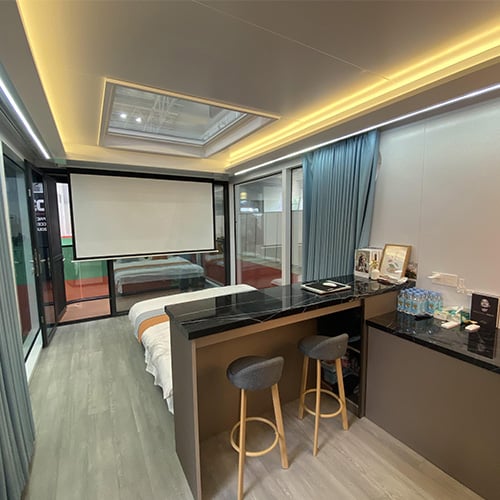
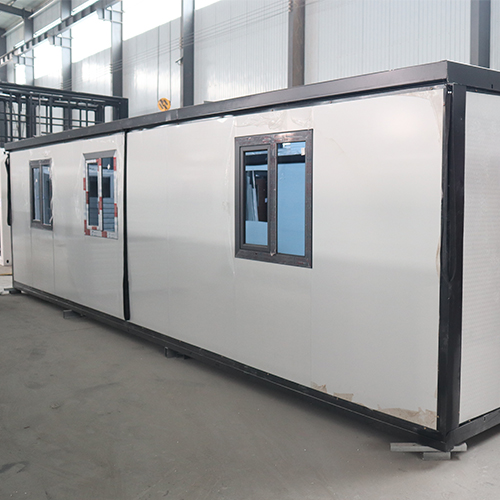
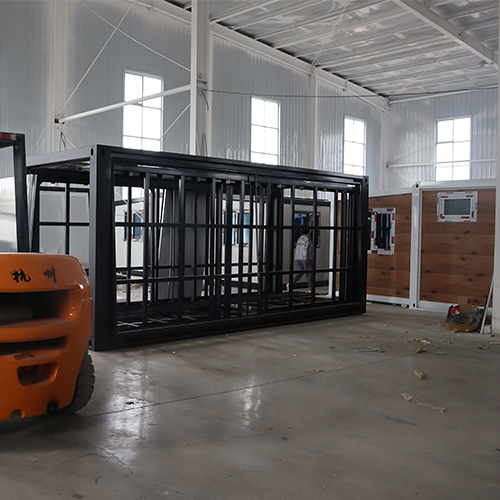
Technology should reinforce the physical unit: insulation, layout, acoustic comfort, drainage, service access, and exterior integration still shape the guest experience and operating cost. ZYC’s product range includes space-capsule options for tourism and commercial accommodation concepts, alongside other modular building formats. Operators exploring a product direction can review the New Energy Solar Space Capsule Cultural Tourism Creative Space Capsule B&B AI Intelligent Control Space Capsule as a starting point for a supplier discussion, then validate the specific configuration, control scope, installation conditions, and local compliance needs for their own project.
For a tourism developer, a sample unit or staged pilot can be more informative than a long specification sheet. Use it to test check-in, nighttime controls, cleaning access, mobile coverage, condensation management, guest instructions, and fault recovery under actual site conditions.
A practical procurement checklist
- List the operational problem each proposed smart function solves.
- Test guest controls, staff permissions, and manual fallback in the same demonstration.
- Review access control alongside arrival support and emergency procedures.
- Obtain a documented division of responsibility for safety systems, software, connectivity, and maintenance.
- Confirm spare-parts availability, training, updates, and post-installation support.
- Run a pilot or acceptance test with the people who will clean, host, and maintain the units.
How to score smart space capsule features before purchase
Use a weighted scorecard rather than a simple yes-or-no feature list. For each smart space capsule feature, score guest value, staff value, failure impact, supplier support, and commissioning effort. A function that looks attractive in a product video may receive a low score if it needs a proprietary account, has no local override, or adds a long recovery process for staff.
Guest comfort and room readiness
Smart space capsule features for lighting, climate, and privacy should create a predictable arrival experience. Test whether a guest can find the sleep setting, adjust lighting without leaving the bed, and understand the controls without a tutorial. Operators should also ask whether an unoccupied unit can be returned to an agreed room-ready state after checkout. That makes housekeeping handoff more consistent across a multi-cabin site.
Staff response and maintenance access
When evaluating smart space capsule features, have an operator—not only a salesperson—run common exception scenarios. Simulate a disconnected router, a discharged door credential, a sensor error, and a late-night comfort complaint. Record the steps, required tools, and time to restore normal operation. This exercise reveals whether the smart layer supports the operating team or shifts work into a remote support queue.
Integration boundaries and handover
Smart space capsule features may connect with booking, access, metering, or property-management tools, but each connection needs a clear owner. Ask which party configures accounts, retains administrator rights, updates software, and provides exportable records at handover. Confirm that the cabin can continue normal local operation while an integration is being serviced. For tourism accommodation, that resilience is often more valuable than a long integration list.
Finally, compare the proposed smart space capsule features against the project’s opening plan. A phased installation can be sensible: begin with essential guest controls, access procedures, and safety-related monitoring; then add data-driven management functions after staff workflows are stable. This approach gives operators evidence from their own site before committing to an expanded system.
Make the feature set fit the property
The most useful smart space capsule features are the ones that fit a property’s staffing model and guest promise. A well-chosen combination of local controls, managed access, clear status visibility, resilient ventilation, and maintainable systems can support a more consistent stay without adding unnecessary complexity. Build the specification around proven workflows, document the fallback path for every critical feature, and treat supplier support as part of the product decision.