EN
EN

Temporary Toilet for Construction Sites: Compliance, Types & Bulk Buying Tips
When you're setting up a temporary toilet for a construction site, the clock is already running. Between coordinating subcontractors, managing material deliveries, and hitting permit deadlines, sanitation, including your temporary toilet setup, can feel like a secondary concern until an OSHA inspector shows up. Federal regulations set mandatory minimum ratios of workers to toilet units, and failure to meet them carries real penalties. Beyond compliance, the type of unit you choose and how you approach bulk procurement will shape both your project budget and your crew's daily experience on-site. This guide walks you through exactly what matters: the regulatory thresholds, the practical differences between unit types, and a sourcing checklist for buying in volume.
1. Compliance Requirements: OSHA, ADA, and Cleaning Frequency
Under OSHA 29 CFR 1926.51, construction employers must provide a compliant temporary toilet for each required worker threshold based on headcount. The table below reflects the federal standard:
| Number of Workers on Site | Minimum Required Facilities |
|---|---|
| 20 or fewer | 1 toilet |
| 21 to 199 | 1 toilet seat + 1 urinal per 40 workers |
| 200 or more | 1 toilet seat + 1 urinal per 50 workers |
These are legal minimums. ANSI goes further, recommending approximately one unit per 10 workers for a standard 40-hour workweek. Many site managers find this threshold more realistic for maintaining sanitation and reducing downtime caused by queuing.
ADA requirements add another layer. If your site employs workers with disabilities, at least one accessible unit — with wider interior clearance and grab bars — must be provided. This isn't just an industry standard; in many jurisdictions, failing to accommodate workers with disabilities on-site can trigger separate violations.
Cleaning frequency is where many buyers underestimate ongoing cost. A portable potty unit on a standard construction site should be serviced at least once per week under normal occupancy. High-traffic sites — over 10 daily users per unit — typically require twice-weekly service. Budget this into your total project sanitation cost, not just the unit acquisition price.
One frequently overlooked compliance cost: some states and municipalities layer additional requirements on top of federal OSHA standards, including stricter worker ratios, mandatory handwashing stations alongside each unit, or required signage. Verify local codes before finalizing your order quantity.
2. Plastic Portable Potty vs. Steel Modular Temporary Toilet: Key Differences
The most common decision construction procurement managers face is whether a standard plastic portable potty or a steel modular temporary toilet structure better fits their site requirements. Both have legitimate use cases; the right choice depends on project duration, site conditions, and user density.
| Criteria | Plastic Portable Unit | Steel Modular Temporary Toilet |
|---|---|---|
| Unit cost | Lower upfront | Higher upfront, longer usable life |
| Durability | Adequate for short-term sites | Suitable for multi-year projects |
| Thermal performance | Minimal insulation | Sandwich panel walls reduce heat/cold extremes |
| Amenities | Basic (single fixture) | Can include shower room, wash basin, ventilation |
| Relocation | Easy to move with a forklift or truck | Requires equipment; less frequent relocation |
| ADA compliance potential | Specialized units available | Can be configured with accessibility features |
A standard plastic portable porta potty is the default choice for short-duration projects (under six months), scattered worksites where units need to move frequently, or budgets where keeping initial outlay low matters more than amenity level. These units are widely available for rental and work well when you need basic compliance coverage quickly.
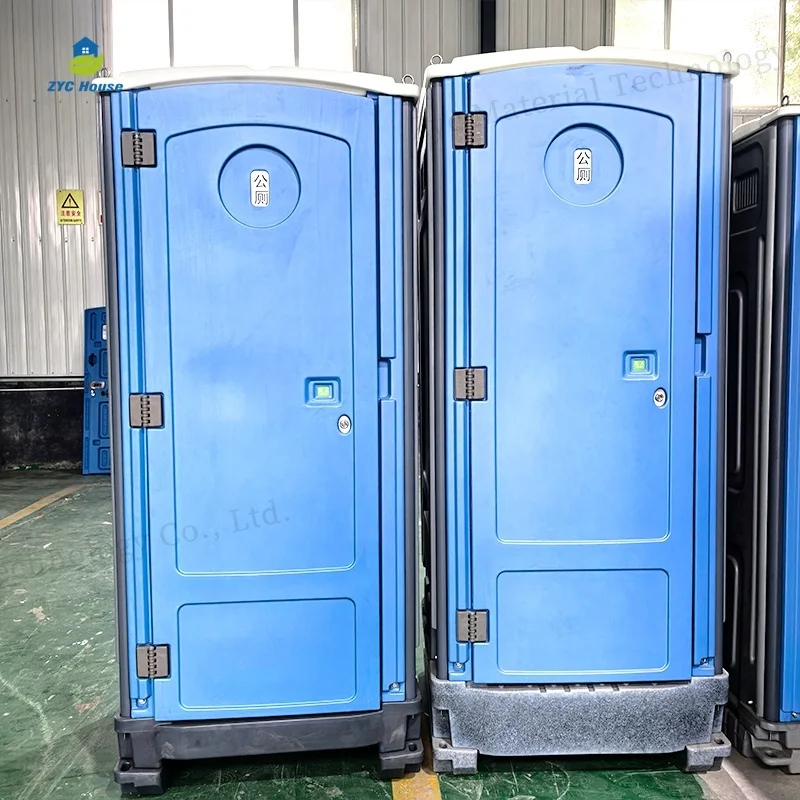
A steel modular temporary toilet makes more sense when the site will run for over a year, when worker density is high enough that basic plastic units would cycle through chemical treatment too fast, or when you're operating in extreme climates. The sandwich panel walls provide real thermal protection — relevant for both hot desert sites and cold-weather builds. Units like those designed for mobile public steel toilet applications can include integrated shower rooms and are built for multi-season outdoor deployment.
From a project lifecycle perspective, the math changes when you factor in servicing costs over time. A plastic unit that costs less to acquire but requires more frequent chemical servicing and replacement may end up costing more per worker-month than a steel unit that runs lower-maintenance over a 24-month project. Run the math for your specific project timeline before defaulting to the lowest upfront price.
3. Bulk Buying Checklist: Verifying Specs Before Ordering from a Chinese Factory
If you're sourcing temporary toilet units in bulk from a Chinese manufacturer (whether portable potty style or steel modular), the inquiry phase is where risk gets controlled. The common trap: a factory quote looks significantly lower than local suppliers, but the landed cost, after freight, import duties, and any compliance upgrades on arrival, often closes that gap or reverses it entirely.
Use the following checklist when evaluating factory quotes:
- Frame material and gauge: Confirm whether the frame is galvanized or hot-dip galvanized steel, and request the wall thickness spec. Thinner panels may not hold up in high-humidity or coastal environments.
- Panel specification: For steel modular units, verify the sandwich panel core material (EPS, rock wool, or PU) and its thermal resistance rating. This matters if units will be used in extreme temperatures.
- Pre-installed fixtures: Clarify what's included — toilet, wash basin, ventilation fan, and plumbing connections should be confirmed, not assumed. A quote that doesn't specify may mean a base shell only.
- Dimensions and container loading: For a temporary toilet order, confirm how many 20ft or 40ft units fit per shipping container. This directly affects your per-unit freight cost.
- Export documentation: Request packing list, inspection report, and quality check records before shipment. These are also your baseline documentation for customs clearance.
- Sample availability: For first-time orders, confirm whether a sample unit can be ordered before committing to a full production run.
For reference, ZYC's wholesale portable plastic restroom units and their steel toilet line are both designed with export documentation support — an important baseline for B2B buyers managing cross-border logistics compliance.
One more procurement note: price per unit from the factory is not the same as cost per unit at your site. Factor in inland freight within China to the port, ocean freight, destination port handling, local delivery to site, and any installation labor. For steel modular units in particular, on-site installation typically requires equipment access. Budget for that before comparing factory quotes to local rental alternatives.
Summary
Choosing the right temporary toilet for a construction site comes down to three decisions made in sequence: how many units you need to stay compliant with OSHA and ADA standards, which unit type fits your project duration and site conditions, and how to structure a bulk order that doesn't look cheap on paper but cost more in practice. Getting those three right for your temporary toilet fleet — especially before the first workers arrive — is what separates a well-run site from one that's firefighting sanitation issues mid-project.