EN
EN

Tourism Hotel Accommodation Using Container Homes: Investment & Build Guide for Developers
The market for outdoor and experiential tourism hotel stays is expanding rapidly. Global glamping revenues are projected to exceed USD 5.94 billion by 2030, growing at a CAGR of roughly 9.7%, with cabins and pods now holding over 43% of market share in 2025. For developers building resorts in Europe and North America, container-based structures—including apple cabins, space capsules, and expandable modular units—have become a well-established path to tourism hotel development with lower capital requirements and faster deployment than traditional construction.
Before committing to a product type, it is worth being direct about one thing: the economics of container-based accommodation in the tourism industry depend far more on site costs, shipping, and installation than on the unit purchase price alone. Developers who enter container tourism hotel projects expecting the box price to represent the total investment are consistently the ones who face capital shortfalls mid-project.
Why Container Structures Are Gaining Ground in Tourism Hotel Development
Container structures offer a combination of advantages that align well with the operational needs of modern tourism hotel projects, particularly for resort operators in remote or scenic locations:
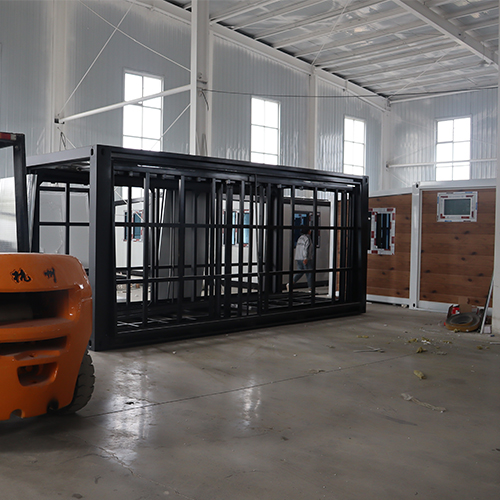
- Speed to revenue: Factory-prefabricated units arrive with plumbing, electrical, and interior finish largely complete. Installation time is a fraction of traditional construction, which affects how quickly a tourism hotel project generates revenue after breaking ground.
- Year-round operation: Properly insulated container cabins can operate in winter conditions, unlike glamping tents that face 2–4 month seasonal closures in northern European and Canadian markets. For accommodation in the tourism industry at northern latitude resort sites, this operational continuity is a significant differentiator.
- Modular scalability: Start with 8–10 units, verify occupancy demand, and add capacity unit by unit. For tourism guest house operators who want to grow incrementally, modular expansion avoids committing to a large capital outlay at the start.
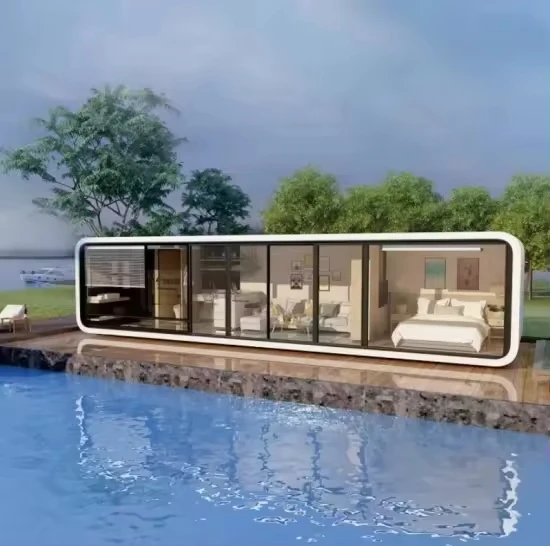
- Visual differentiation: The geometry of apple cabins and space capsule units creates guest experiences that drive repeat and referral bookings and justify premium nightly rates—a key revenue lever in the glamping-adjacent tourism hotel segment.
Site Selection for Container Tourism Accommodation
Site selection determines project feasibility before a unit is purchased. For a container tourism hotel or tourism guest house, the key variables are:
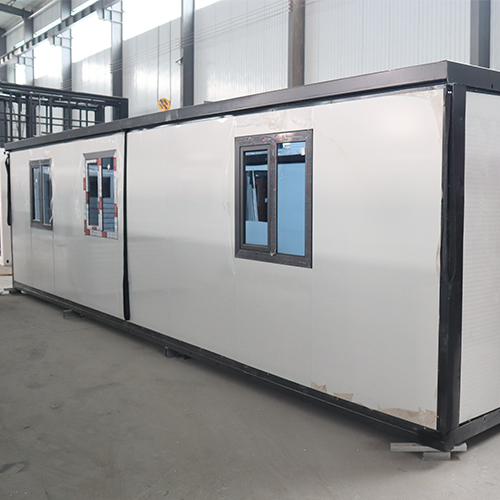
- Road access: Standard container tourism hotel units arrive on flatbed trucks. If access roads are narrow, expandable units—which fold compact during transit—are the practical solution.
- Foundation type: Pile foundations or concrete pads are standard for container accommodation in the tourism industry. Actual foundation cost depends on ground conditions and can range from minimal in flat, stable terrain to significant in rocky or waterlogged sites.
- Zoning and permits: Permanent tourism hotel accommodation structures require building permits in most European jurisdictions and US states, even when technically removable. The UK, France, and the Netherlands have established glamping permit frameworks, but requirements vary by local authority. Verifying zoning requirements before ordering units prevents costly project delays.
Container Accommodation Types: Comparison for Tourism Hotel Developers
The three main structure types for tourism hotel use each suit different project profiles. Choosing between them is primarily a function of target guest experience, site logistics, and per-unit budget:
| Type | Ideal For | Guest Capacity | Key Trade-offs |
|---|---|---|---|
| Apple Cabin | Tourism guest house, accessible resort pricing, high visual impact | 2–4 guests | Compact footprint; strong booking appeal; limited interior area |
| Space Capsule | Premium tourism hotel experience, smart amenities, off-grid sites | 2 guests | Solar and AI control options; highest differentiation for boutique tourism accommodation |
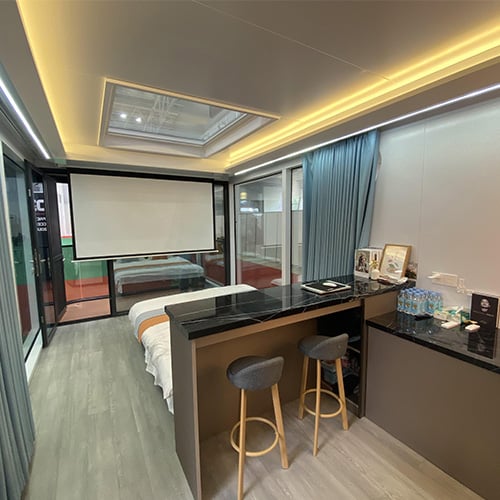
| Expandable Container | Family-format tourism accommodation, higher guest density | 4–6 guests | Largest floor area per shipping cost; folds for reduced freight to Europe and North America |
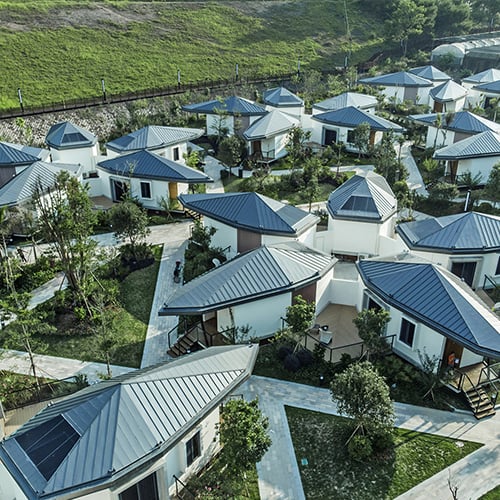
For North American tourism hotel development, where the cabin and pod format drives 38.8% of the glamping market (~USD 1.31 billion), the apple cabin format offers the fastest path to bookable, photogenic accommodation. For European resorts—where sustainability is a primary driver across the 35%+ regional market share—the off-grid solar space capsule aligns with eco-premium positioning.
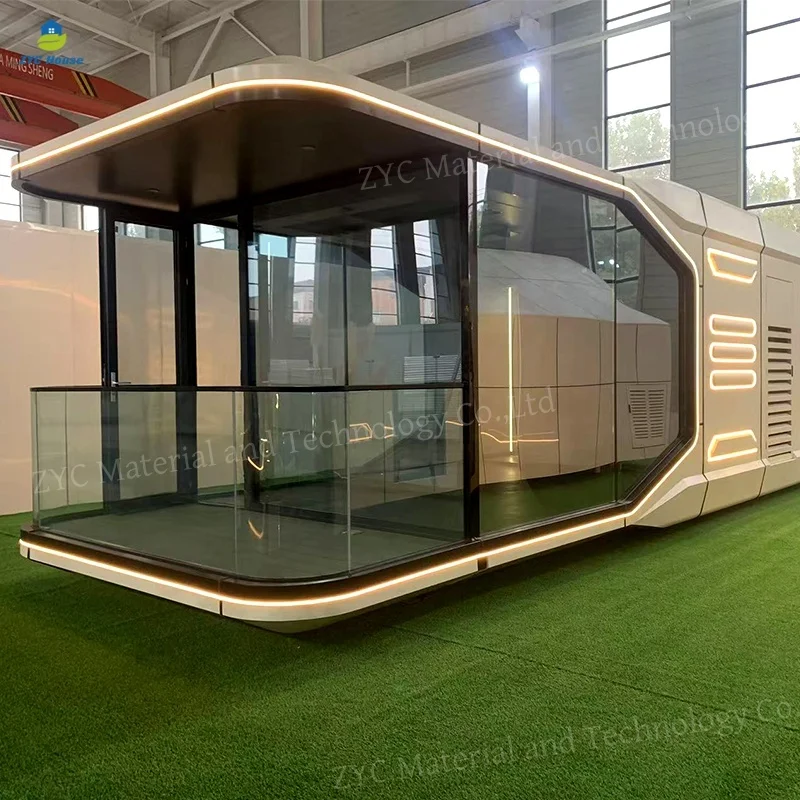
ZYC manufactures both types: a solar space capsule unit with AI intelligent control built for tourism hotel B&B applications, and an apple cabin format designed for accessible-priced tourism accommodation in the tourism industry. Detailed specifications are available for the New Energy Solar Space Capsule and the Apple Cabin Container House.
Cost Structure and ROI for Container Tourism Hotel Projects
Transparent cost modeling is essential for any tourism hotel investment. Per available project benchmarks, a container unit suitable for tourism accommodation typically costs $35,000–$60,000 USD, with a 20-unit resort coming in at $240,000–$340,000 for units alone. However, total tourism hotel project cost will include:
- Site development: Typically $5,000–$15,000 per unit area, representing 10%–20% of total investment in most projects.
- Shipping to Europe or North America: $2,000–$5,000 per unit from China, with foldable units reducing per-unit freight cost.
- Local installation and utility connections: Varies significantly by site conditions and local labor rates.
- Long-term maintenance: Years 1–3 are typically low-cost; anti-corrosion and mechanical maintenance becomes a recurring budget line from Year 4 onward.
For ROI modeling: in high-demand European and North American resort zones, premium container tourism hotel cabins can achieve nightly rates of $150–$400 USD. At 60% annual occupancy and $200/night ADR, a $50,000 unit in isolation could recover unit cost within 2–3 seasons—but real tourism hotel projects have substantially higher total investment, which makes full-stack cost modeling essential before capital commitment.
Compliance Requirements for Tourism Hotel Accommodation
Compliance is the most frequently underestimated dimension of container-based accommodation in the tourism industry. Key areas to resolve before installation:
- Building classification: Permanent vs. temporary classification affects permits, design requirements, and local tax treatment.
- Fire safety: Tourism hotel accommodation facilities must meet local codes including detection systems, egress standards, and—depending on jurisdiction and unit count—suppression systems.
- Electrical standards: EU and North American electrical standards differ. Units ordered from Chinese manufacturers should be specified to the target market standard at order stage to avoid field modification costs.
For tourism hotel projects at commercial accommodation scale, engaging a local planning consultant before finalizing the order is the most effective way to prevent receiving a product that does not meet local code requirements.
Summary: Selecting the Right Container Format for Your Tourism Hotel
The right container structure depends on your target guest experience, site constraints, and compliance environment. For fast-deployment tourism guest house projects with accessible pricing, the apple cabin is the most cost-efficient starting point. For premium boutique tourism hotel positioning with smart amenity integration, the space capsule format supports higher ADR and stronger brand differentiation. For family-format accommodation in the tourism industry with larger suite requirements, the expandable container typically offers the highest interior space-to-shipping cost ratio.
Whichever format fits your project, accurate full-stack cost modeling—not just the unit price—is the foundation of a sound tourism hotel investment decision.