EN
EN

What Is a Portable Potty? Types, Sizes & How to Choose the Right One
If you're planning a construction project, organizing an outdoor festival, or setting up a temporary work camp, sanitation is one of the first logistics decisions that matters. A portable potty — or portable restroom — is a self-contained, moveable sanitation unit designed for locations where permanent plumbing isn't available. Getting the right portable potty for your site or event depends on understanding the different types, standard sizes, and how to estimate the number of units you actually need.
Having coordinated sanitation logistics for multi-month job sites, I can tell you: many buyers start by asking about the lowest-price portable potty option. What they focus on after deployment is whether the unit fits the space, how often it gets serviced, and whether it's accessible to everyone on site. Getting those details right from the start saves a lot of trouble during deployment.
What Is a Portable Potty?
A portable potty — also referred to as a portable porta potty, portable restroom, or temporary toilet — is a freestanding sanitation unit built for environments without plumbing access. The basic structure includes a durable plastic housing, a waste holding tank, a toilet seat, and ventilation to manage odor. Most portable potty units are designed to move by hand or with standard equipment, and they're used on construction sites, at outdoor events, in campgrounds, and in emergency relief deployments.
It's worth distinguishing a commercial portable potty from child potty training seats — both share the name but serve entirely different purposes. The portable potty units described here are full-size, freestanding solutions for adult use in commercial, industrial, and event settings.
Types of Portable Potties
Not all portable potties are the same. There are four main portable potty categories, each suited to different requirements and budgets.
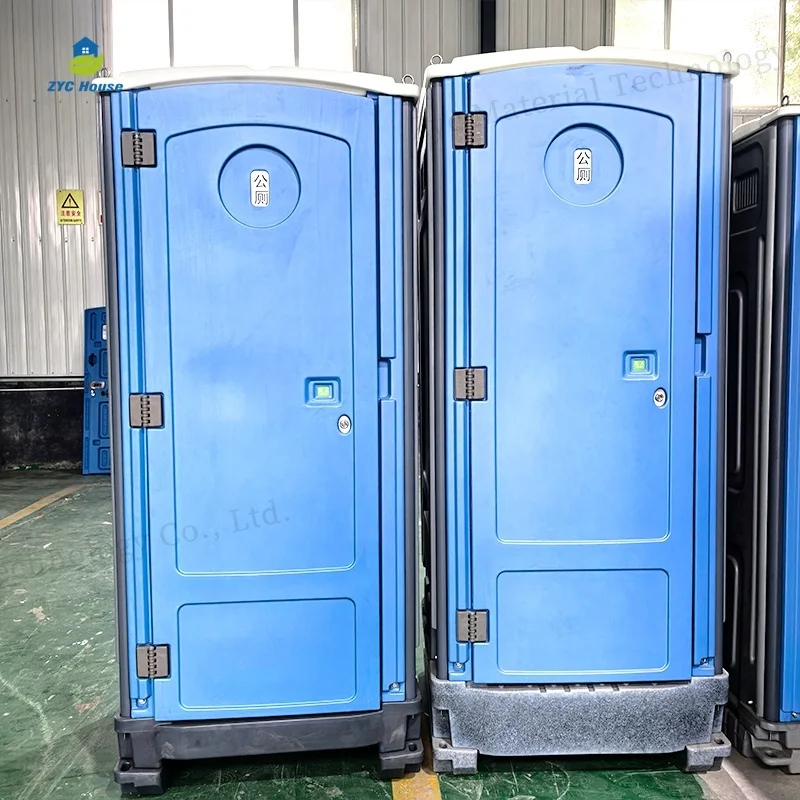
Standard Portable Potty
The standard portable potty is the most widely used type. It includes a basic toilet seat, a waste tank (typically 60–70 gallons), and ventilation through a pipe at the top. Cleaning supplies such as hand sanitizer are usually included. Standard portable potty units are cost-effective, easy to transport, and adequate for most construction scenarios where function is the priority.
Deluxe Portable Potty (with Interior Handwashing Sink)
Deluxe or "luxury standard" portable potty units add an interior handwashing sink with fresh water supply, improved ventilation, and sometimes a flushing mechanism. They offer a noticeably better experience for events where guests are in formal attire or for job sites with higher hygiene standards. If your event serves alcohol, upgrading to deluxe portable potties is generally worth the added cost — usage frequency increases, and cleaning demand follows.
ADA-Compliant Portable Potty
ADA-compliant portable potties are designed for wheelchair users and individuals with limited mobility. These units are significantly larger — typically around 60 inches wide by 80 inches deep — with interior turning radius, grab bars, and a low-profile seat. They don't require a ramp for entry. For any public event or worksite open to the public, at least one ADA-compliant portable potty is typically required by regulation.
Restroom Trailer (Mobile Restroom Unit)
Restroom trailers are multi-stall portable units mounted on a trailer chassis, offering climate control, interior lighting, and running water. They're typically used for weddings, corporate events, and VIP areas where appearance and comfort are priorities. Trailers require a vehicle for transport and a power source to operate, which adds to planning requirements.
Portable Potty Sizes: What to Expect
Standard portable potty dimensions fall roughly in this range: 88–90 inches tall, 43–44 inches wide, and 46–48 inches deep. That footprint fits on a standard pallet and can be staged in most outdoor areas with minimal clearance requirements. ADA-compliant portable potty units have a larger footprint — typically 60 inches wide by 80–84 inches deep — to accommodate interior wheelchair turning radius.
Restroom trailers vary by configuration (2-stall, 4-stall, 6-stall), but a 2-stall trailer is typically 20–22 feet long and 8 feet wide. Setup requires level ground and enough clearance for the tow vehicle.
When planning for a portable potty deployment, factor in access paths for service vehicles — a pump truck typically needs to pull alongside the unit — and turnaround space if you're placing multiple portable potties in a row.
Use Cases: Which Portable Potty Fits Which Scenario
- Construction sites and long-term job camps: Standard portable potty units with regular service schedules work well. Workers are on-site for extended periods, so consistent servicing (typically once or twice per week) matters more than features. Deluxe portable potties are worth considering for sites running beyond six months.
- Outdoor events (festivals, concerts, sporting events): Event usage is high-intensity and short-duration. Deluxe portable potties with handwashing facilities are strongly preferred. ADA-compliant portable potty units are typically required for public events.
- Camping and outdoor recreation: Standard or compact portable potty units work for campgrounds. The main variable is peak occupancy on weekends versus weekdays and how long the site operates between service visits.
- Emergency relief and disaster response: Standard portable potties deployed rapidly are the practical choice. Quantity, logistics speed, and durability in varied conditions matter most.
How Many Portable Potties Do You Need?
Underestimating portable potty quantity is a common planning mistake. The ANSI standard for construction sites is a useful starting point: one portable potty per 10 workers per 40-hour work week. The calculation assumes standard service frequency. For larger crews or sites in remote locations with less frequent access, plan on more units.
For events, the widely applied rule is one portable potty per 50 guests for events lasting up to four hours. For larger events like concerts or festivals, the recommendation shifts to 2–3 portable potties per 100 guests, accounting for longer duration and higher concurrent usage. If your event has a higher proportion of female attendees or runs longer than four hours, add 20–25% more units.
Several variables tend to be underestimated: each additional hour of event duration adds roughly 10% to portable potty demand; alcohol consumption pushes usage frequency up significantly; and remote locations limit how often units can be serviced.
Key Factors When Choosing a Portable Potty
- Accessibility requirements: If the site or event is open to the public, ADA-compliant portable potty units are typically required. Plan at least one ADA portable potty per 20 standard units as a starting point.
- Service frequency: A portable potty's quality only holds if it's serviced consistently. Confirm cleaning frequency, waste disposal protocols, and what's included in the service contract before committing.
- Buy vs. rent: For recurring projects or permanent camp deployments, purchasing portable potty units outright is often more cost-effective over a 12–24 month horizon. For one-off events, rental is simpler.
- Durability and climate: Portable potty units deployed in coastal, high-humidity, or extreme-temperature environments benefit from materials suited to those conditions.
ZYC manufactures mobile plastic portable restroom units designed for B2B procurement, with supply options for construction camp deployment, outdoor event staging, and international project export. Explore their portable restroom supply options or their portable toilet plastic cabin for outdoor and camping deployment.
The most important thing is matching the portable potty type and quantity to your actual usage pattern — not just the headline price per unit. The lowest-cost portable potty rarely delivers strong overall value once you factor in service frequency, replacement cycles, and user experience.